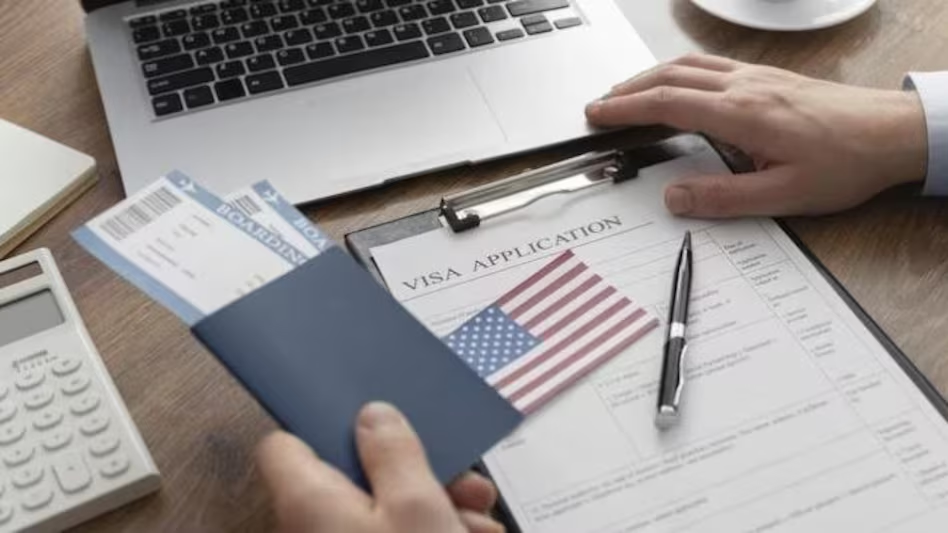
Starting October 28, 2025, the U.S. Citizenship and Immigration Services (USCIS) will begin accepting only electronic payments for all paper-filed immigration forms. The move marks a significant step toward a faster, safer, and more efficient payment system across the agency’s operations.
Under the new rule, applicants and third-party payors must complete transactions digitally through credit or debit cards using Form G-1450 (Authorization for Credit Card Transactions) or ACH debit transactions from U.S. bank accounts using Form G-1650 (Authorization for ACH Transactions).
The transition to electronic payments eliminates the need to bring checks or money orders to USCIS field offices. It also supports Executive Order 14247, which requires government-wide adoption of modern electronic payment systems for all federal transactions.
USCIS Pushes for Full Electronic Payments
The policy change reflects a growing federal priority to modernize how agencies collect and manage funds. According to USCIS Spokesman Matthew Tragesser, the agency aims to align immigration services with current banking and technology standards.
“Over 90 percent of our payments still come from checks and money orders,” Tragesser said. “They slow down processing, increase the risk of fraud, and cause unnecessary delays. Moving to electronic payments is common sense.”
This shift also brings USCIS into compliance with the Department of the Treasury’s Financial Management Service guidelines, which require agencies to migrate away from paper-based payment methods.
By adopting electronic payment systems, USCIS expects to speed up application processing times, reduce administrative costs, and improve accuracy in financial record-keeping.
Why Electronic Payments Matter
USCIS processes millions of applications every year, and each one involves a filing fee. Previously, payments made by checks or money orders had to pass through multiple layers of manual verification. This process created delays and made it harder to track or recover lost payments.
Electronic payments for immigration forms simplify this system. They enable instant verification, real-time tracking, and secure fund transfers. Applicants can now pay and receive confirmation in minutes rather than days.
The new policy also supports federal goals for digital transformation. By replacing paper payments with electronic transactions, USCIS can allocate more resources toward core immigration services instead of payment reconciliation and error management.
Moreover, electronic payments create a clear audit trail that enhances transparency and accountability in government financial operations.
How to Make Electronic Payments for USCIS Forms
Applicants filing immigration forms by mail must now use one of two authorized electronic payment methods:
-
Credit or Debit Card (Form G-1450):
Fill out and attach Form G-1450 to the front of your paper application. This form allows USCIS to process your payment securely through the government’s electronic system. Once processed, all card information is destroyed to protect your data. -
ACH Debit (Form G-1650):
If you prefer to pay directly from a U.S. bank account, use Form G-1650. This form authorizes an Automated Clearing House (ACH) debit, which transfers funds directly and securely.
USCIS recommends verifying that your card or bank account has sufficient funds before filing. Any payment failure can result in a rejected application.
USCIS Encourages Online Filing and Electronic Payments
While the new rule applies to paper-filed forms, USCIS continues to encourage applicants to submit forms and fees online. Filing electronically provides access to step-by-step guidance, automatic data validation, and instant payment confirmation, the federal government’s secure payment portal.
Applicants who use the USCIS online account can file, track, and manage their cases efficiently. They also gain access to helpful tools, such as document checklists, filing instructions, and communication channels with USCIS representatives.
By combining online filing with electronic payments, applicants can experience faster processing and fewer form rejections.
Advantages of Electronic Payments
The adoption of electronic payments benefits both USCIS and applicants in several important ways:
-
Speed:
Electronic transactions process instantly, allowing USCIS to begin reviewing applications sooner. -
Accuracy:
Digital payments reduce manual errors, such as mismatched payment details or incorrect fee amounts. -
Security:
Electronic systems use encryption and government-grade cybersecurity protocols to protect applicants’ financial data. -
Convenience:
Applicants no longer need to obtain checks or money orders or visit physical offices to make payments. -
Transparency:
Every transaction leaves a verifiable digital record, making it easier to track payments and issue refunds if necessary.
These improvements position USCIS electronic payment systems as a model for other federal agencies seeking modernization and efficiency.
Limited Exemptions to Electronic Payment Requirement
Although the new rule applies broadly, USCIS confirms that a small number of applicants may qualify for exemptions. These include:
-
Applicants from regions or institutions without access to U.S. banking systems.
-
Cases involving humanitarian relief programs that require special payment handling.
-
Federal or state government submissions where electronic authorization is not yet supported.
USCIS will evaluate exemption requests individually, and applicants must provide valid documentation before filing.
Government-Wide Shift to Digital Transactions
The move toward electronic payments for immigration forms reflects a larger shift across federal agencies. The Internal Revenue Service (IRS), Social Security Administration (SSA), and Department of State have also implemented secure online payment platforms for their services.
The White House’s Executive Order 14247 aims to make the United States government a fully digital payee and payer. The initiative supports transparency, reduces costs, and ensures compliance with global digital finance standards.
By adopting electronic payment methods, agencies can process funds faster, reduce human errors, and improve public trust in government operations.
Security and Compliance of Electronic Payments
Security remains a top priority for USCIS. All electronic payment transactions pass through pay.gov, a federally managed platform known for its robust encryption and compliance with Federal Information Security Management Act (FISMA) standards.
Card and bank details are never stored beyond the transaction period. USCIS also uses secure network protocols to prevent unauthorized access or tampering.
The agency’s digital systems undergo regular audits by the Department of Homeland Security (DHS) to maintain compliance with national cybersecurity guidelines.
These safeguards assure applicants that their financial information remains protected throughout every step of the payment process.
Preparing for the Transition to Electronic Payments
Applicants should start preparing for the October 28 transition to avoid disruptions. Below are key steps to ensure compliance:
-
Download Updated Forms:
Use the latest versions of Forms G-1450 or G-1650 from the official USCIS website. -
Verify Payment Information:
Double-check card limits or bank balances before submission to avoid payment rejection. -
Attach Forms Correctly:
Place the payment authorization form at the front of your application packet. -
Avoid Outdated Payment Methods:
Do not send checks or money orders after October 28, as USCIS will not process them. -
Retain Records:
Keep a digital copy of your payment authorization or confirmation for your records.
These steps ensure smoother application submission under the new USCIS electronic payment system.
Broader Impact on Immigration Processing
The shift toward electronic payments for paper-filed USCIS forms is part of a broader modernization effort. USCIS aims to reduce processing backlogs, improve response times, and strengthen data security.
By cutting reliance on manual payments, the agency expects faster financial reconciliation and a smoother applicant experience. The change may also encourage more users to migrate to online filing systems, reducing the burden on field offices.
As immigration volumes rise, USCIS believes that electronic payment systems will enhance efficiency and sustainability across its operations.
Conclusion
USCIS’s transition to electronic payments for paper-filed forms represents a major step forward in modernizing federal immigration services. The change promises faster processing, better security, and more convenience for applicants across the United States.
While some may face an adjustment period, the benefits of digital transactions outweigh short-term challenges. The move aligns with national goals for electronic payment modernization and supports a more transparent, efficient, and accountable immigration system.
By embracing secure online payment methods, applicants can file with confidence and stay aligned with the federal government’s digital transformation goals.
Maple Crest Immigration Law Firm
Navigating U.S. immigration procedures can be complex, but you don’t have to do it alone. The legal team at Maple Crest Immigration Law Firm offers clear, reliable guidance for every step of your journey. Reach out today for trusted support with your visa, green card, or citizenship application.